
The Science of Relief: How Deep Tissue Strokes Dissolve Chronic Knots
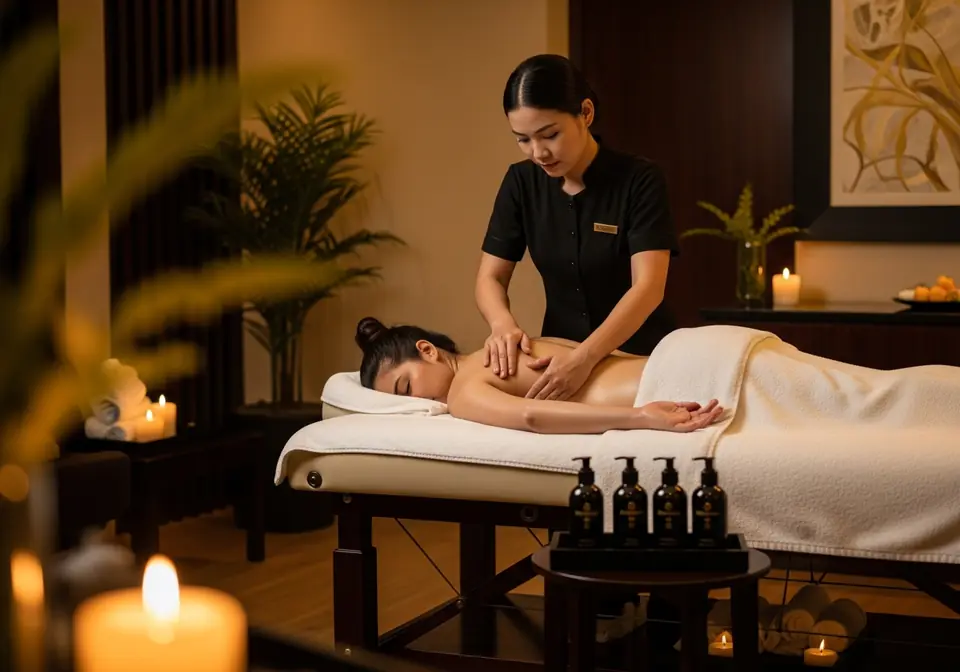
We colloquially call them "knots," but the clinical term is an adhesion. When a standard relaxation massage simply glides over these painful areas without providing lasting relief, it’s because adhesions require a structural, mechanical intervention.
If you've been dealing with chronic pain and are searching for a Body Spa Near Me, understanding the exact science behind deep tissue massage will help you choose the right therapy to finally resolve the root cause of your discomfort.
What Exactly is a Muscle "Knot"?
To understand how deep tissue massage works, you first have to understand the microscopic structure of what it’s fixing.
Healthy muscle fibers run smoothly and parallel to each other, allowing them to glide effortlessly as they contract and stretch. However, when muscles are subjected to repetitive stress, chronic poor posture, or an acute injury, the body attempts to repair the resulting micro-tears by laying down collagen.
Unfortunately, the body often rushes this repair job. The collagen isn't always laid down neatly. Instead, it forms a chaotic, web-like structure that binds muscle fibers, fascia (the connective tissue surrounding muscles), and sometimes even nerves together into a glued-up mass. This is an adhesion. It severely restricts blood flow, limits your range of motion, and refers sharp, aching pain to other areas of your body.
The Clinical Mechanics of Deep Tissue Strokes
Deep tissue massage is frequently misunderstood as just a Swedish massage with more pressure applied. In reality, it is a highly targeted, clinical approach designed to physically break down these collagen cross-links. Here is how specific strokes achieve structural change:
1. Cross-Fiber Friction for Mechanical Breakdown
Therapists use specific friction techniques—applying firm, concentrated pressure perpendicularly across the grain of the muscle. This physical shearing force micro-traumatizes the chaotic collagen web of the adhesion. By breaking these restrictive, glued bonds, the muscle fibers are finally freed to realign into their natural, parallel structure.
2. Fascial Stripping
Fascia can become just as tangled and glued together as the muscle tissue itself. Therapists use a technique called "stripping," where they use a thumb, knuckle, forearm, or elbow to glide slowly along the entire length of the muscle fiber with deep, sustained pressure. This ironing motion smooths out the fascia, physically separating the glued layers of tissue.
3. Inducing Localized Hyperemia
Adhesions are notoriously ischemic—meaning they are starved of blood flow. The intense, localized pressure of deep tissue strokes physically forces stagnant blood and built-up metabolic waste (like lactic acid) out of the trapped tissue. When the therapist releases that pressure, fresh, oxygen-rich blood forcefully rushes back in. This flood of nutrients—a process called hyperemia—is absolutely essential for the newly separated muscle fibers to heal properly.
Targeting the Primary Trouble Zones
While deep tissue techniques can be applied anywhere on the body, they are profoundly effective for the dense, overworked musculature of the back and shoulders:
- The Shoulders (Trapezius & Rhomboids): Under stress, our shoulders naturally creep up toward our ears, locking the trapezius in a chronically shortened state. Deep tissue work here breaks the specific adhesions that cause tension headaches, neck stiffness, and that burning sensation between the shoulder blades.
- The Lower Back (Erector Spinae & Quadratus Lumborum): Prolonged sitting weakens and overstretches the lower back while simultaneously shortening the hip flexors. Deep strokes applied parallel to the spine help release the protective muscle spasms these areas create, restoring crucial mobility to the lumbar and pelvic region.
Choosing Structural Recovery
Resolving dense adhesions requires a high degree of anatomical knowledge and physical precision. If you are experiencing chronic restriction, booking a specialized Deep Tissue Massage Bangalore will yield far better, longer-lasting results than a generalized relaxation treatment.
The ultimate goal isn't just a temporary escape from stress; it's to mechanically restructure your tissue so you can move, work, and live without pain.
First-Visit Offer
Reboot Your Body Today
Book any massage at our Marathahalli spa and get ₹500 off your first visit.